Showing posts with label Sony Xperia Z. Show all posts

The best Android phones available, June 2013


reznaf | 12:00 PM | , , , , , , , , , , ,

HTC One, Galaxy S4

Find out which handset gets the Android Central recommendation

We're six months down the road from our last "best Android phones" roundup, and the smartphone landscape has altered dramatically. Back in December we crowned the Samsung Galaxy S3 king of all Android phones, on account of its responsiveness, broad availability and excellent performance across the board. A generation later, the Android space is dominated by two new heavyweights -- the Galaxy S4 and HTC One, with other contenders including the Xperia Z and ZL from Sony and LG's Nexus 4.

In mid-2013, buttery-smooth performance, beautiful screens, high-quality cameras, 4G LTE connectivity and Jelly Bean out of the box come as standard at the high-end. Competition is more fierce than ever, and that's resulted in some of the best Android hardware we've ever seen.
But there can be only one winner. Join us after the break to find out which phone takes the prize.

The best of the best - HTC One

HTC One

We really have reached the point where the top of the Android smartphone market is blanketed by some highly impressive devices. It's tough to go wrong. There's something for everyone, be it form factor or features or gimmicks and gizmos. But for our money, there's currently no better phone available than the HTC One.

There's a lot to like here. The (mostly) all-aluminum body looks and feels more sophisticated than a plastic phone, and the gentle curve fits the hand nicely. While we've still got our quibbles with the Sense user interface, Sense 5 is the most stylish version yet, and most important is that it doesn't exhibit the lag that we've seen in the Samsung Galaxy S4.

The front-facing stereo speakers change the way you experience music and videos on a smartphone. Games and movies are much more immersive and are a downright pleasure to play and listen to. There are a few times when the speakers may be too loud, but there are many more times when you're amazed you're getting that sort of sound from a smartphone.

HTC's camera also brought forth a bit of a paradigm shift. It's not the best all-around camera -- it suffers from contrast issues, and if you need something with a higher total resolution for enlarging pictures, you'll need to look elsewhere. But the introduction of Zoes -- the 3-second video clips -- and the introduction of automatically composed Video Highlights are something that nobody else is doing, and they make up for a lackluster camera application.
The HTC One also has been released on three of the four major U.S. carriers, as well as seeing wide availability worldwide -- and we're expecting Verizon to get its own variant this year as well.
In the months we've been using the HTC One, it's continuously caught the eyes of those around us and continued to impress us with its performance -- and for that it ranks as our best smartphone for first part of 2013.

The runner-up - Samsung Galaxy S4

Galaxy S4

If ever there was a phone to beat, it was this one. Samsung took everything that was good in the Galaxy S3 and made it better in its successor, the Galaxy S4.

Well, maybe not quite everything. The plastic body remains a turn-off for many, and it's certainly not as chic as the aluminum HTC One. It's also lost a bit of the curve of the Galaxy S3. And while Samsung has managed to squeeze a 5-inch display into the same size as the slightly smaller Galaxy S3, the IPS or Super LCD displays on other phones perform better in sunlight and seems to better handle shifts in brightness. The TouchWiz user interface has been refined a bit, but it's still flat in places and doesn't match the sophistication of other UIs.

Samsung's camera, however, remains the best in the business, as far as everyday use is concerned. It's filled with features, and the camera app itself is a joy to use, having been adapted from the high-end Samsung Galaxy Camera. You might not use features like the animated gif creator every day, but they're fun to have, even if they're not all that innovative.

But what landed the Galaxy S4 as our No. 2 is the laggy user interface -- we've experienced delays and stutters on a number of versions of the phone -- as well as the anemic storage situation. Samsung's 16-gigabyte version of the GS4 only has about 9 gigabytes of storage available to the end user. And while Samsung likes to say you can add another 64 gigabytes with a microSD card, that's a different kind of storage. Good luck keeping your larger games and apps on there. The sin isn't so much that Samsung's using all that space for the hundreds of features on the phone -- and it's got some really good preloaded apps and settings. The sin is that in 2013, that sort of deceptive marking and, for many, a lack of larger storage options, is unacceptable.

Would we recommend someone buy the Galaxy S4, which is available on just about every carrier on Earth? Absolutely. It just might not be the first phone we suggest.

The best oversized phone - LG Optimus G Pro

Optimus G Pro


The other South Korean manufacturer -- LG -- has a bit of a dark horse on its hands with the Optimus G Pro. It's a 5.5-inch phone -- in the same class as the wildly popular Samsung Galaxy Note 2, but without the pen input. It also improves on the Note with a higher-resolution display, updated internals and a slightly narrower body.

LG's user interface still leaves a bit to be desired, but it's also come a long way in a short time. The Optimus G Pro has a more-than-capable camera, and it's the first outside of the Nexus line to sport the Photosphere feature.

Hamstringing the Optimus G Pro, however, is availability. In the United States, it's only available on AT&T, and it's seen limited release worldwide as well, though that's beginning to change. We're also expecting Samsung to at least match the Optimus G Pro's specs and features later this year. But for now, it's a pleasant addition to the oversized phone market.

Honorable mentions

It's not fair to just focus on the top three. Here are a few other contenders that are worth a look if the latest Samsung, HTC and LG handsets don't float your boat.

Sony Xperia Z and Xperia ZL

The Xperia Z for Europe and Xperia ZL for North America put Sony back in the game. The Japanese manufacturer might be something of an outcast as far as U.S. carriers support goes, but its latest Android smartphones have a lot to offer. Speedy performance, a clean UI and great camera software are highlights for both the Z and ZL. The Xperia Z also offers water resistant capabilities, though at the cost of ergonomics -- it's a blocky handset that can be uncomfortable to use. And both phones suffer from poor viewing angles, though on-screen images are crisp and clear when viewed head-on. Overall, both the Xperia Z and Xperia ZL are decent phones, but not without their share of niggling issues.

LG Nexus 4

Despite the recent trend towards "Google Editions" of popular phones like the Galaxy S4 and HTC One, there's only one real Nexus, and LG and Google's collaboration remains the best value Android phone you can buy. (As ever, we'd recommend you spend a little extra and pick up the 16GB model.)

In mid-2013, the Nexus 4's main weakness is its lack of (official) LTE support. We don't know whether the dormant T-Mobile LTE capabilities will be reactivated, but we can't help thinking if that was going to happen, it would've happened by now. So with the Nexus 4 you're going to top out at DC-HSDPA (42Mbps) data speeds. For some buyers, that's no big deal; for others, it's a deal-breaker. Aside from that, you're looking at a very speedy phone with stock Android, lightning-fast updates from Google and recently a new white color option, if the standard black model isn't doing it for you. Even now, we'd struggle to think of a better phone for the $300-350 contract-free asking price.

Samsung Galaxy S3

Now 12 months old, the Galaxy S3 is positively geriatric by smartphone standards. But the GS3 is still being sold by carriers around the world, and some are even just getting around to launching it. Much of the praise we heaped upon the GS3 back in December still applies today -- it's still fast, feature-packed, LTE-capable and eminently available wherever in the world you happen to be. The one part of the S3 that hasn't aged so well is the screen -- compared to the current crop of smartphone displays, it's not great. If we were being unkind, we might even call it below-average. But if you're looking for a good, solid mid-level phone that won't cost you much on-contract, the GS3 fits the bill -- just be aware that you're already a year into its life cycle at this point.

source: androidcentral.com

CES 2013 - The Best, The Worst, And Everything In-Between


reznaf | 9:27 PM | , , , , , , , , , ,

The Best

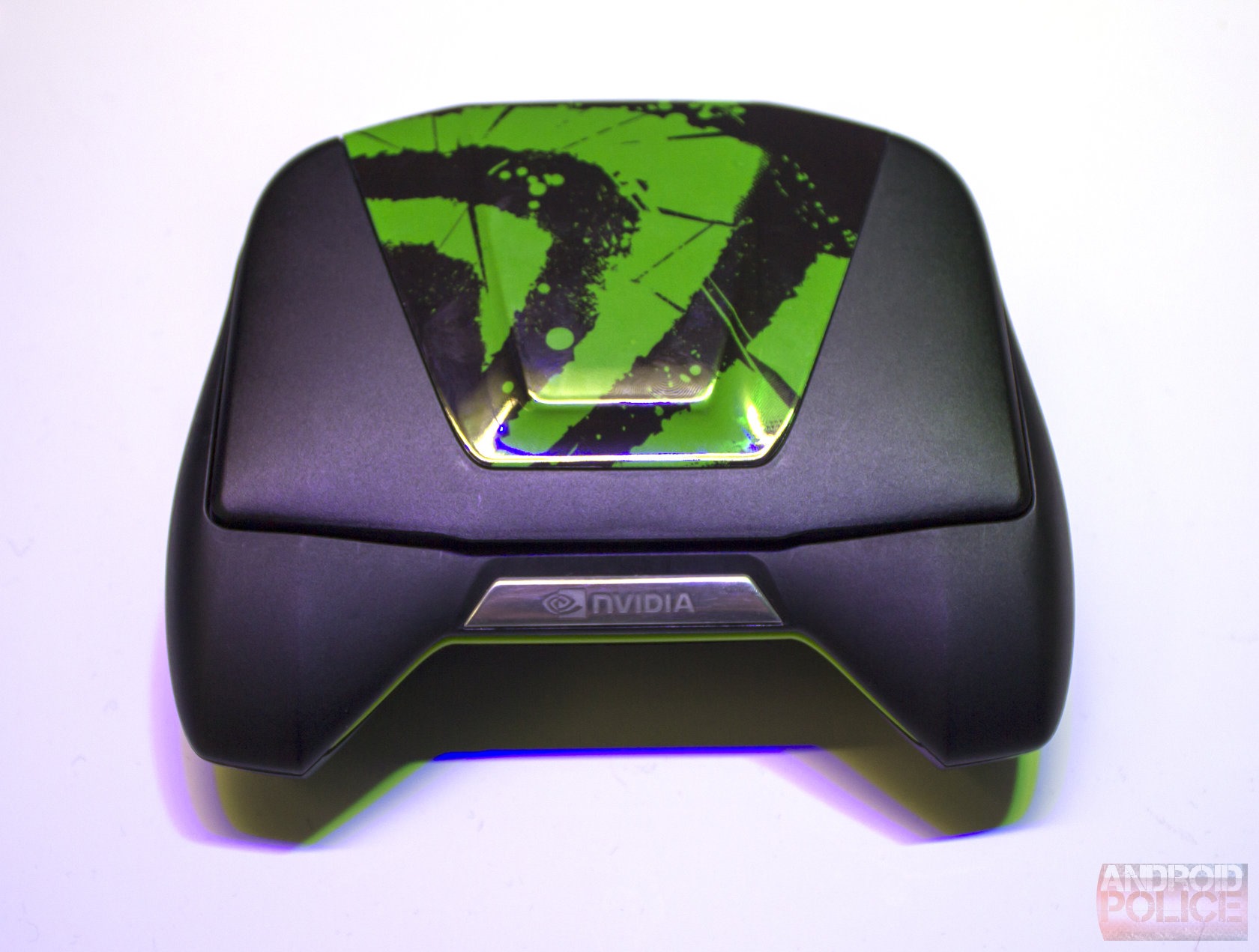
My Favorite: NVIDIA's Shield

Listen, you can say Shield's going to fail because it'll be too expensive. You can say people don't want a handheld  gaming console that doesn't fit in your pocket. And you can say NVIDIA arbitrarily makes games incompatible by using proprietary code for enhanced visuals, which fragments the Android platform. And maybe, on all three counts, you'd at least have a leg to stand on.

wm_IMG_1700

But that doesn't change for a moment the fact that Shield was the most important product at this year's CES, hands down. Sony could have unveiled an 84" OLED 4K TV that makes pizza and does your laundry, and Shield still would have been more important. In a show full of incremental improvements, single-spec hypebeasting (COUGH 4K COUGH), gimmicks, and downright lame press conferences (looking at you, Samsung and LG), Shield was a beacon of hope.
I'm not saying it's going to turn the world upside-down. I'm not saying it won't be overpriced. And I'm not saying that every little detail will be perfect by the time it ships. But Shield represents the first serious effort to make mobile gaming a serious industry. Nothing - and I mean nothing - has come into this space so boldly, and made the case so convincingly that a premium mobile gaming experience should exist. Ouya, frankly, relies on a value proposition, and it's one that simply doesn't target the gamer demographic - it's far more casual. NVIDIA has put its chips down and said "we want to make a mobile gaming console for gamers."
It could be an unprecedented success. It could be a miserable failure. We don't know yet. But what we do know is that NVIDIA will try to make it work, and NVIDIA has the financial footing to lose money, making Shield visible in the marketplace before it turns the corner to profitability - something few Kickstarter projects can say.

Honorable Mention: YotaPhone

OK, I admit - the idea of an e-ink screen on the back of a phone sounds really, really gimmicky at first blush. But the possibilities something like this allows for are just way too easy to geek out on. I desperately want to see other manufacturers take something away from this idea, because the YotaPhone is an exceptional oddity in an increasingly bland hardware ecosystem. Check out our coverage of it for more on why I think this strange little Russian phone is important.

wm_IMG_1642

The Worst

My Favorite (... To Dislike): Polaroid iM1836 Android Camera

Oh god, Polaroid. Why? I mean, really, there is so much wrong with the iM836 that I honestly wonder what kind of la-la land Polaroid's management lives in to think this is a good idea. OK, let me clarify that a little - why this product in particular is a good idea. Because it's not - it's terrible. The concept, I guess, has at least some potential merit. But Polaroid saw fit to ruin it.

wm_IMG_1560

Let's start with the lesser of the horrible flaws. The UI is super slow. The build quality feels like some cheap point and shoot you'd get for a hundred bucks at Target (the iM1836 costs $400). When we tried it, we couldn't even get the camera app to work. All of these things add up to a ghastly user experience. But there's one flaw that outweighs all of these. A flaw so egregious that I can scarcely understand the backward-ass logic Polaroid tries to explain it with.
Look at the picture. Notice anything... odd? Like how there's no sensor in the body of the camera - just a black plastic square that kinda-sorta looks like one? And how on the lens there isn't actually glass at the base, just a mirror finish piece of metal that looks glassy? That's because Polaroid put the image sensor inside the lens. So apart from portability, there is no reason for this camera's lens to be removable in the first place. And what exactly is the point of interchangeable lenses if you can't, you know, interchange to a different lens? You might be able to eventually, when Polaroid makes some, but that means you'll not only be buying a Polaroid lens (because it basically has to be), you'll be buying one with a sensor inside of it. So you'll have a camera body, two lenses, and two sensors. WHY?
Polaroid's explanation is that, because consumers are lazy - alright, I'm with them so far - they'll leave the camera body exposed and the sensor will get dirty or damaged, and their photos will be ruined. Right. Because the tradeoffs here are in no way vastly more impractical and quite simply stupid than any supposed benefits in the form of easy care. Trust me, Polaroid - a dirty sensor is going to be the last worry for anyone that owns one of these travesties.

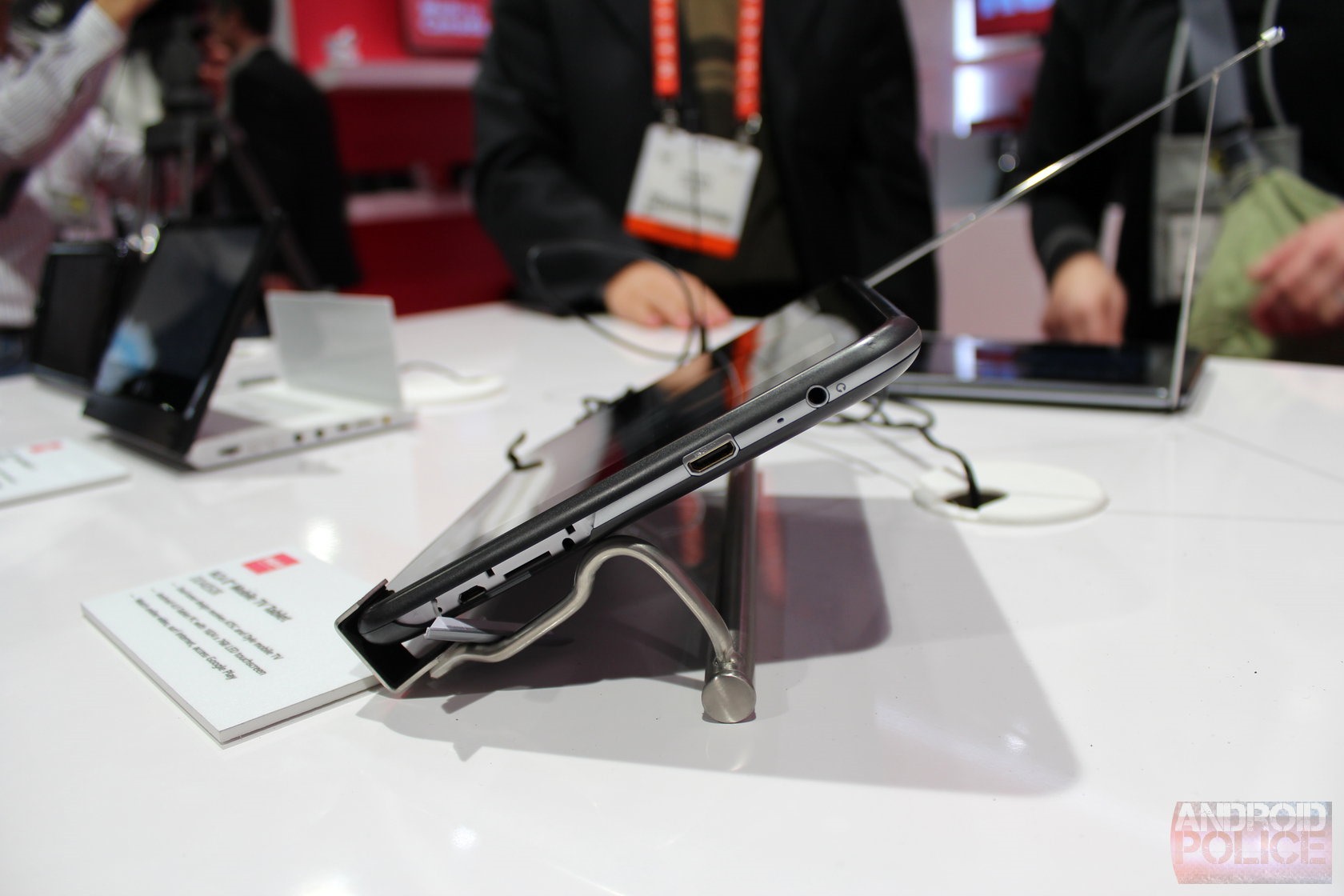
Dishonorable Mention: RCA's 8" Mobile TV Tablet

RCA isn't exactly a company people in the US really, you know, respect these days. In fact, RCA doesn't even make most of its TVs anymore. So when I heard the company was planning to market an Android tablet with a TV antenna and sell it in the US, my curiosity was mostly related to just how bad it was going to be. The answer? Pretty bad. It could be worse, sure, but man, I honestly feel bad for the guys at the RCA booth who had to vouch for this thing.

wm_IMG_1572

It has one, simple job: deliver live TV over the air. And it does this by means of a fairly ugly app that looks like it was designed for a phone. And that app just kind of stops working should you decide to do multitasking of any kind, and you have to restart it to get the connection back. The app then takes a solid 30 seconds to acquire a Dyle TV signal, and the picture quality is just terrible. It doesn't catch HDTV signal over the air, and the build quality of the whole thing is kind of depressing. The viewing angles on the display are among the worst I've ever seen on any tablet this side of China. And it costs $300 for this... privilege.

The Meh

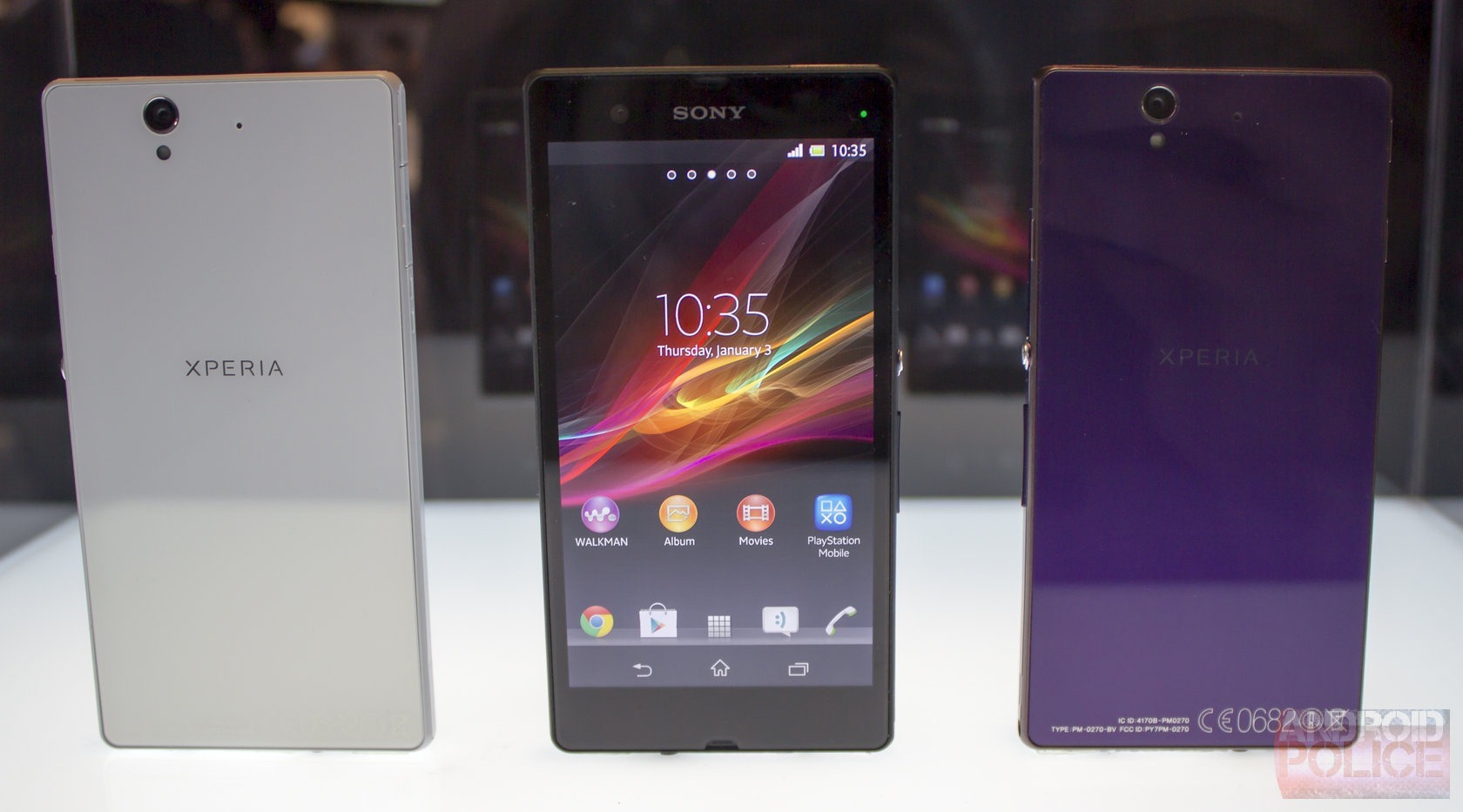
Sony's Xperia Z / ZL

I love how Sony's phones look. I don't love how they perform, or how they look once the screen is on. Sony showed off two powerful new handsets at CES, the Xperia Z and ZL, with new 13MP cameras, and one of them (the Z) is even waterproof. And I can't bring myself to care. As much as I harp on Samsung for being so obsessed with gimmicks, I think what Sony does is worse: they play it too safe. Too conservative. There is no feeling of tech-lust when I pick up a Sony phone - it's just another pretty slab that runs Android. Maybe the Z and ZL will resonate with the average consumer more - who knows.

nexusae0_wm_IMG_14861

For me, they're just not exciting. And in regard to the Z, having to pry open a port cover every time I want to charge up or plug in my headphones just sounds annoying. I'll take my chances in the wet, dusty world, Sony. The Z and ZL are far from being bad (I'm sure they're very good, actually), but in a fickle market dominated by Apple and Samsung, this just doesn't seem like the breakout hardware Sony needed to get into the smartphone game in a big way. What did they need? To be different. And they just aren't.

Wrap-Up

While I will go on record as saying that this CES was probably one of the most boring ever, it certainly wasn't a total waste. NVIDIA's Shield showed us something genuinely new and cool, and things like YotaPhone provided much-needed respite from the 4K-washing-machine-with-a-touchscreen fever that seemed to envelop the place. We got to see cool stuff, bad stuff, and genuinely weird stuff.
Will we be back next year? Probably. We might do things a little differently, though, given the growing scarcity of truly interesting product announcements that happen at CES. But more and more companies are leaving CES for dedicated trade shows (like MWC and IFA), or for their own product unveilings. Think about this: Microsoft, Apple, Google, Facebook, and Amazon - none were at CES this year. Can you think of any companies more important in the tech space?
CES has largely become a place where vendors interact with other vendors, manufacturers interact with manufacturers, and competitors scour the show floor for acquisition opportunities and generally eyeball the competition. And iPhone cases. iPhone cases as far as the eye can see. For a show that purports to be focused on consumer electronics, an area that is increasingly synonymous with "mobile technology," CES is straying from relevance.
Consumers don't care so much about what's new in TV's, or washing machine, or refrigerators anymore - we live in an age where these products generally do what we want them to. They have reached a point where the innovations are no longer revolutionary, but evolutionary (or gimmicky). Even personal computing is starting to settle into a comfortable cycle of faster, thinner, and lighter. Say what you will, but no normal consumer gets excited about how many nanometers Intel is fitting a semiconductor on this year.
People do get excited about what something in their pocket can do. How it can change the way they live their lives every day - how a new form factor can alter the way we experience the digital world. I heard often enough that "mobile isn't everything" during CES, but the truly geeky, nerdy part of me feels deep down that mobile is everything, because it's the leaping off point for whatever's next, five, ten, or twenty years from now.

Source: AndroidPolice.com

Related Posts Plugin for WordPress, Blogger...